
Concrete Embers
Where Concrete Becomes Flesh

Story/Images by Ralf Wiegand
At Russell Battery near Fort Stevens, outside Astoria, Oregon, the old military structure still carries the weight of its original purpose. It was built for defense, for protection, for the hard geometry of strategy and survival. Concrete, rust, narrow access points, dark chambers, weather stains, and the slow invasion of vegetation all remain as visible evidence of time passing through a place that was never meant to be soft.
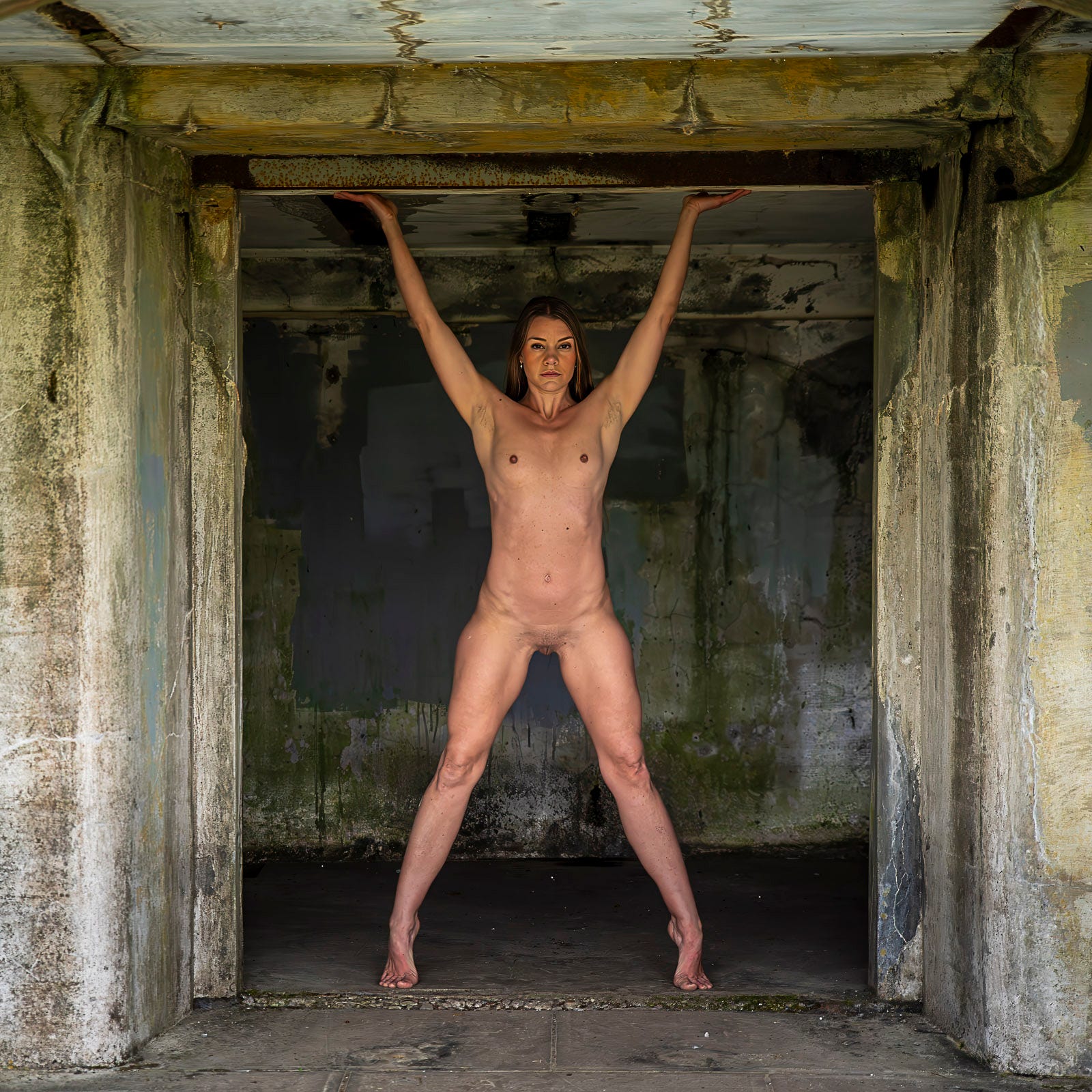
And yet, inside this ruin, the human body changes everything.
This photograph is powerful because it is built on contrast. The exposed concrete is rough, stained, cold, and unforgiving. The rusted beam above the model’s hands carries the color of age and oxidation. The walls are marked by moisture, decay, and organic growth. Nothing in the structure tries to be beautiful in a traditional way. It is utilitarian, wounded, and heavy. But placed within this space, the nude figure becomes the living center of the image. The softness of skin stands against the hardness of concrete. The warmth of the body pushes against the damp green-gray tones of the walls. The natural lines of the human form interrupt the rigid architecture of the battery.
That tension is what makes the image work.
The pose is strong, almost architectural in itself. The model’s arms reach upward, touching the structure above her, as if she is holding the space open or claiming it. Her legs create a grounded, symmetrical stance. The body becomes a vertical force within a rectangular frame. There is no sense of fragility here. The nude figure is not passive. She is present, direct, and commanding. She does not disappear into the ruin; she activates it.
The framing is especially important. The access point around her becomes a natural proscenium, almost like a stage or altar. The walls on both sides pull the eye inward. The ceiling above, reflected or wet with surface texture, creates a compressed upper boundary. The dark background behind her allows the body to separate from the space without feeling artificial. The photograph uses the architecture as a frame within a frame, giving the image both depth and visual authority.
This is one of the reasons the picture feels like fine art rather than simply a nude photograph in an abandoned place. The location is not just a backdrop. It is part of the meaning.
Russell Battery carries history in its surfaces. Every stain, crack, rust mark, and weathered edge speaks of time. The human figure, by contrast, speaks of the immediate moment. Skin is temporary. Breath is temporary. The pose exists only for the camera’s instant. The structure has stood for generations, but the body exists in the present. That relationship between permanence and vulnerability gives the image emotional weight.
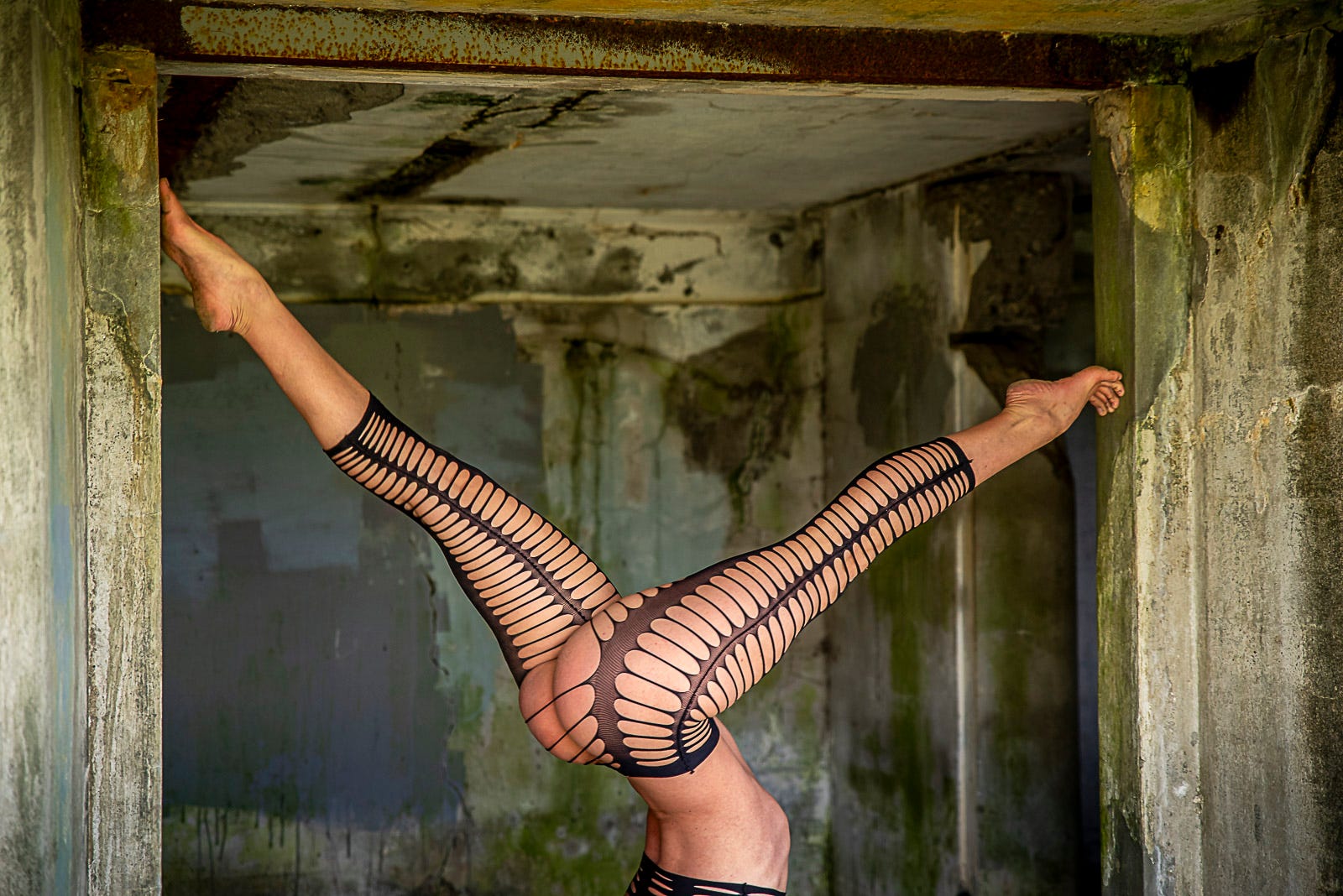
The vegetation and moisture inside the battery add another layer. Nature is slowly reclaiming the military structure. What was once built to resist invasion is now being invaded by moss, water, roots, and decay. Against that slow transformation, the body becomes another natural presence. The figure does not feel out of place. Instead, she becomes part of the same process: human, organic, alive, and temporary inside a man-made shell that is also slowly returning to earth.
The light is quiet but essential. It does not glamorize the scene. It reveals it. The light catches the planes of the body while still allowing the shadows to remain heavy. It gives shape to the torso, arms, face, and legs without making the image feel overly polished. The skin has warmth, but the environment keeps its rawness. This balance is difficult. Too much light would destroy the mystery. Too little light would lose the figure. Here, the light creates presence.
What also makes the image compelling is the emotional directness of the model. Her gaze is steady. There is no theatrical exaggeration, no unnecessary gesture, no attempt to soften the intensity of the setting. She meets the camera with calm force. That expression turns the photograph into something more than a study of form. It becomes a confrontation between viewer, place, and subject.
The nude body here is not decorative. It is symbolic.
It becomes a measure of scale, showing the size and weight of the structure. It becomes a contrast to the decay, showing life within ruin. It becomes a sculptural form, echoing and resisting the hard lines around it. It becomes a statement of vulnerability and power at the same time.
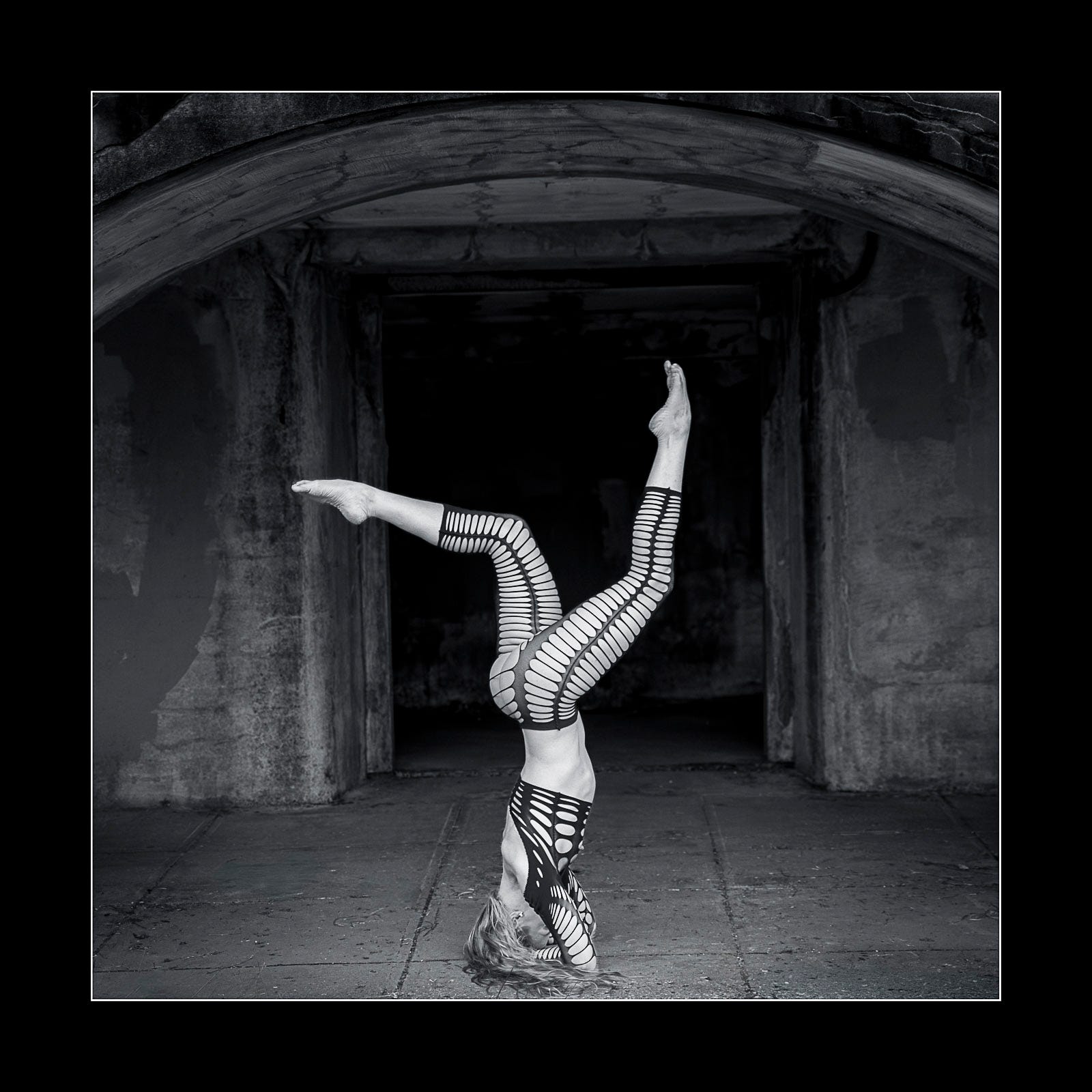
This is why creative nude art can be so strong when done with intention. The body is not used as shock or ornament. It is used as language. In this photograph, the body speaks about exposure, endurance, tension, beauty, and time. The nude form reveals what clothing would hide: the pure line, the posture, the relationship between human softness and architectural force.
The composition succeeds because every element has a role. The concrete walls create weight. The rust introduces color and age. The vegetation suggests time and reclamation. The rectangular access point creates structure. The shadowed interior gives mystery. The model’s pose creates strength. The light gives form. Together, these elements create an image that feels deliberate, balanced, and alive.
Russell Battery is not a comfortable place. That is exactly why it works. Beauty here does not come from perfection. It comes from collision: body against bunker, softness against corrosion, life against history, skin against stone.
This photograph is a true piece of creative nude art because it does not separate the figure from the world around her. It allows the place and the body to speak to each other. The ruin makes the body more human. The body makes the ruin more emotional. Together, they create something neither could achieve alone.
Inside the old access points of Russell Battery, the photograph finds a rare balance: strength without aggression, vulnerability without weakness, sensuality without decoration, and history without nostalgia.
It is an image of survival, presence, and transformation.
A human form standing inside the remains of human ambition.
A soft body framed by hard memory.
A living figure held by concrete, rust, shadow, and light.
A very, very beautiful body, long, lean and sexy. Love the way she cares for her body